



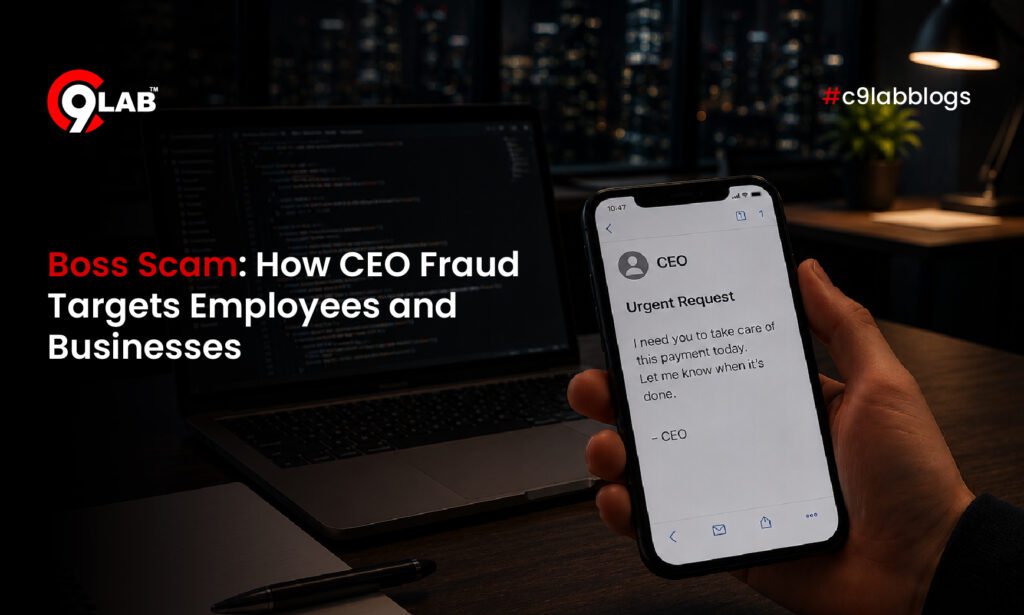
Boss Scam: How CEO Fraud Targets Employees and Businesses
Cybercriminals no longer rely only on malware to attack businesses—they increasingly target people. One of the fastest-growing threats is the Boss Scam, also known as CEO Fraud or Business Email Compromise (BEC). In these attacks, criminals impersonate senior executives to convince employees to transfer money, change payroll details, or share confidential information.
Because these scams exploit trust instead of technical vulnerabilities, organizations of all sizes can become victims. Understanding how Boss Scams work is the first step toward preventing costly financial losses.
Key Takeaways
- Boss Scam is a form of Business Email Compromise (BEC) that targets employees through executive impersonation.
- Attackers use urgency, authority, and social engineering instead of malware.
- Finance, HR, and procurement teams are the most common targets.
- Strong verification processes and employee awareness significantly reduce risk.
- Continuous phishing simulations help employees recognize and stop CEO fraud attempts.
What Is a Boss Scam?
A Boss Scam is a cyberattack in which criminals pretend to be a company executive, such as the CEO or CFO, to trick employees into sending money or sharing sensitive information.
Unlike traditional phishing emails sent to thousands of users, Boss Scams are highly targeted. Attackers research the organization, identify employees responsible for payments, and create convincing emails or messages that appear legitimate.
For example, an employee in the finance department may receive an urgent email from someone pretending to be the CEO requesting an immediate wire transfer for a confidential business deal. Without verification, the employee may unknowingly transfer company funds to cybercriminals.
Why Are Boss Scams Dangerous?
Boss Scams can cause serious financial and operational damage. According to the FBI Internet Crime Complaint Center (IC3), Business Email Compromise remains one of the most expensive cybercrimes worldwide, resulting in billions of dollars in reported losses each year.
The impact extends beyond financial loss and may include:
- Business disruption
- Exposure of confidential information
- Payroll fraud
- Vendor payment fraud
- Reputational damage
- Legal and compliance risks
No organization is immune, and every employee who handles payments or sensitive information can become a target.
How Does a Boss Scam Work?
Most Boss Scams follow a simple but effective process:
1. Research
Attackers gather information about the organization from websites, LinkedIn, press releases, and social media.
2. Executive Impersonation
They create fake email addresses or messaging accounts that closely resemble those of company executives.
3. Create Urgency
The attacker sends a message requesting an urgent payment, confidential document, or payroll update while discouraging employees from verifying the request.
4. Financial Theft
If the employee follows the instructions, money or sensitive information is transferred directly to the attacker.
Common Types of Boss Scams
Cybercriminals use different approaches depending on their target.
Warning Signs Employees Should Never Ignore
Recognizing the warning signs can stop a Boss Scam before any damage occurs.
Watch for:
- Urgent payment requests
- Requests to bypass company procedures
- Confidential instructions
- Slightly altered email addresses or domains
- New supplier bank account details
- Unexpected payroll changes
- Poor grammar or unusual writing style
Whenever something feels unusual, verify the request through another communication channel before taking action.
How Businesses Can Prevent Boss Scams
Organizations can significantly reduce their risk by combining technology with employee awareness.
- Enable Multi-Factor Authentication (MFA) : Protect executive accounts from unauthorized access.
- Configure SPF, DKIM & DMARC : These email authentication standards help reduce domain spoofing and email impersonation.
- Require Dual Approval : High-value financial transactions should always require approval from more than one person.
- Train Employees Regularly : Security awareness training helps employees recognize phishing, social engineering, and executive impersonation attacks.
- Monitor Executive Impersonation :Monitor look-alike domains, fake executive profiles, and suspicious email activity to detect threats early.
Strengthen Your Human Firewall with C9Phish
Technology can block many phishing emails, but employees remain the final line of defense. That’s why continuous security awareness training is essential.
C9Phish is C9Lab’s Security Awareness Training and Phishing Simulation Platform, designed to help organizations prepare employees for real-world cyber threats.
With C9Phish, organizations can:
- Simulate realistic Boss Scam and Business Email Compromise attacks
- Train employees to recognize executive impersonation
- Measure employee risk through detailed reporting
- Deliver role-based security awareness training
- Improve organizational resilience with continuous phishing simulations
Instead of waiting for a real attack, C9Phish allows employees to learn in a safe environment, helping organizations build a stronger human firewall against phishing and CEO fraud.
Conclusion
Boss Scams succeed because they exploit human trust, not software vulnerabilities. By impersonating executives and creating urgency, cybercriminals trick employees into making costly decisions.
Protecting your organization requires more than secure email systems. A combination of Multi-Factor Authentication, email authentication, payment verification procedures, and continuous employee awareness training provides the strongest defense against Business Email Compromise.
By combining these security controls with C9Phish’s phishing simulations and security awareness training, organizations can reduce the risk of CEO fraud, strengthen employee confidence, and build a resilient cybersecurity culture.
Want to see how prepared your employees are?
Book a demo of C9Phish and discover how realistic phishing simulations can help your organization stay one step ahead of modern cyber threats.




Comments
Join the discussion. We’d love to hear your thoughts.