


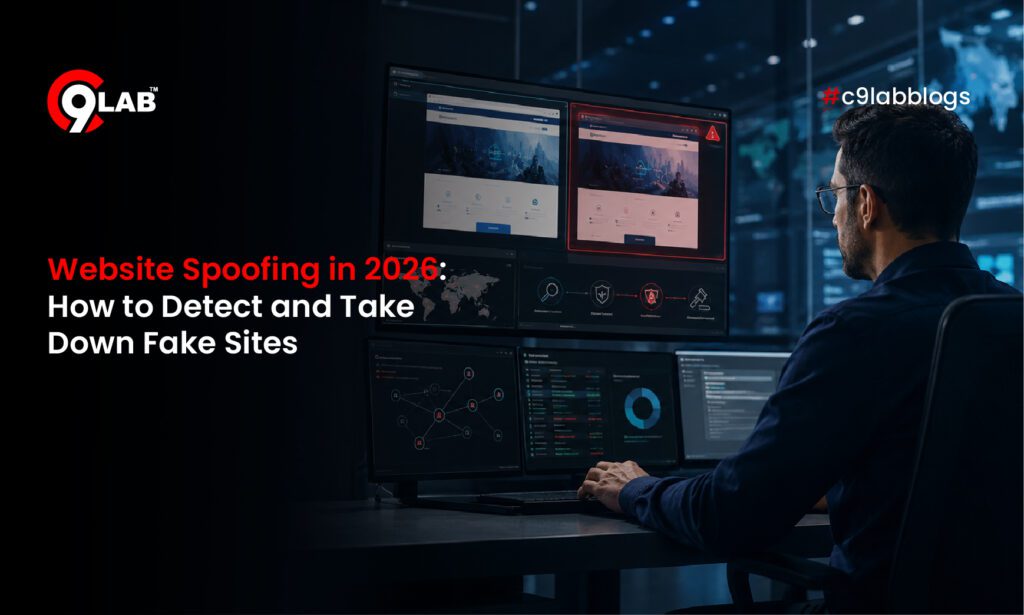
Website spoofing is becoming harder to identify in 2026.
Cybercriminals can now copy a brand’s logo, website design, product pages, login screens, and even support pages to make a fake website look real.
These fake websites are used to steal customer data, capture login credentials, run payment fraud, promote fake offers, and damage brand trust.
For businesses, website spoofing is no longer just a technical issue. It is a direct risk to customers, reputation, and revenue.
What Is Website Spoofing?
In simple terms, website spoofing happens when attackers create a fake website that looks similar to a legitimate brand website.
The fake site may use:
♦️ Similar domain names
♦️ Copied logo and brand colors
♦️ Fake login pages
♦️ Copied product or service pages
♦️ Fake customer support details
♦️ Payment or data collection forms
The goal is simple: make customers believe they are interacting with the real business.
How Fake Sites Trick Customers
For example, spoofed websites often trick customers because they look familiar.
At first glance, a customer may see the right logo, a similar layout, and a professional design. As a result, if the domain also looks close to the original brand, they may not notice the difference.
Common spoofing tricks include:
Common spoofing tricks include:
♦️ Attackers may slightly alter a brand name to create a typosquatting domain that looks legitimate.
♦️ By adding words such as “support,” “login,” “secure,” or “verify,” they can create convincing lookalike domains.
♦️ Customers may also encounter fake landing pages promoting fraudulent offers, refunds, or payment requests.
♦️ To capture usernames, passwords, and OTPs, cybercriminals often recreate legitimate screens as copied login pages.
♦️ In other cases, redirect ch
Why Website Spoofing Is Dangerous
As a result, a fake website can stay live long enough to harm customers before the real brand notices.
It can lead to:
♦️ Customer fraud
♦️ Credential theft
♦️ Payment scams
♦️ Data leakage
♦️ Brand reputation damage
♦️ Legal and compliance risk
♦️ Customer complaints
♦️ Loss of digital trust
In many cases, customers blame the original brand first, even if the fake website was created by cybercriminals.
How to Detect Website Spoofing
Businesses should continuously monitor the internet for signs of brand misuse.
Key things to monitor include:
♦️ New domains similar to your brand name
♦️ Fake login pages using your logo
♦️ Copied website content
♦️ Suspicious SSL certificates
♦️ Brand mentions on unknown websites
♦️ Fake customer support pages
♦️ Malicious redirects
♦️ Phishing URLs shared through email or social media
However, manual checking is no longer enough.. Fake websites can appear quickly and disappear just as fast.
Businesses can also report phishing websites to Report a Scam to help protect users from malicious pages.
How to Take Down Fake Sites
Once a fake website is found, businesses should act quickly.
The takedown process usually includes:
♦️ Collecting evidence such as screenshots, URLs, WHOIS details, and hosting information
♦️ Confirming that the site is impersonating the brand
♦️ Reporting the malicious domain to the registrar
♦️ Contacting the hosting provider with an abuse report
♦️ Submitting phishing URLs to browser and security vendors
♦️ Filing trademark or brand abuse complaints
♦️ Alerting customers if the fake site is actively spreading
♦️ Monitoring for new domains or repeat impersonation attempts
As a result, faster takedown action can reduce the potential impact on customers, revenue, and brand reputation.
How QSafe Helps
QSafe helps businesses detect and respond to website spoofing threats early.
In addition, QSafe monitors fake domains, lookalike websites, copied brand assets, phishing pages, impersonation attempts, and external digital risks connected to your brand.
With early detection and takedown support, QSafe helps reduce customer fraud, protect brand reputation, and strengthen digital trust.
Learn more about how QSafe Digital Risk Protection helps businesses detect and respond to external digital threats.
Final Takeaway
Website spoofing is becoming faster, cleaner, and more convincing in 2026.
A fake site does not need to hack your business to damage your brand. It only needs to look trusted enough to fool your customers.
That is why businesses need continuous monitoring, fast detection, and a clear takedown process.
Protecting your website is important.
But protecting customers from fake versions of your website is just as important.



Comments
Join the discussion. We’d love to hear your thoughts.